
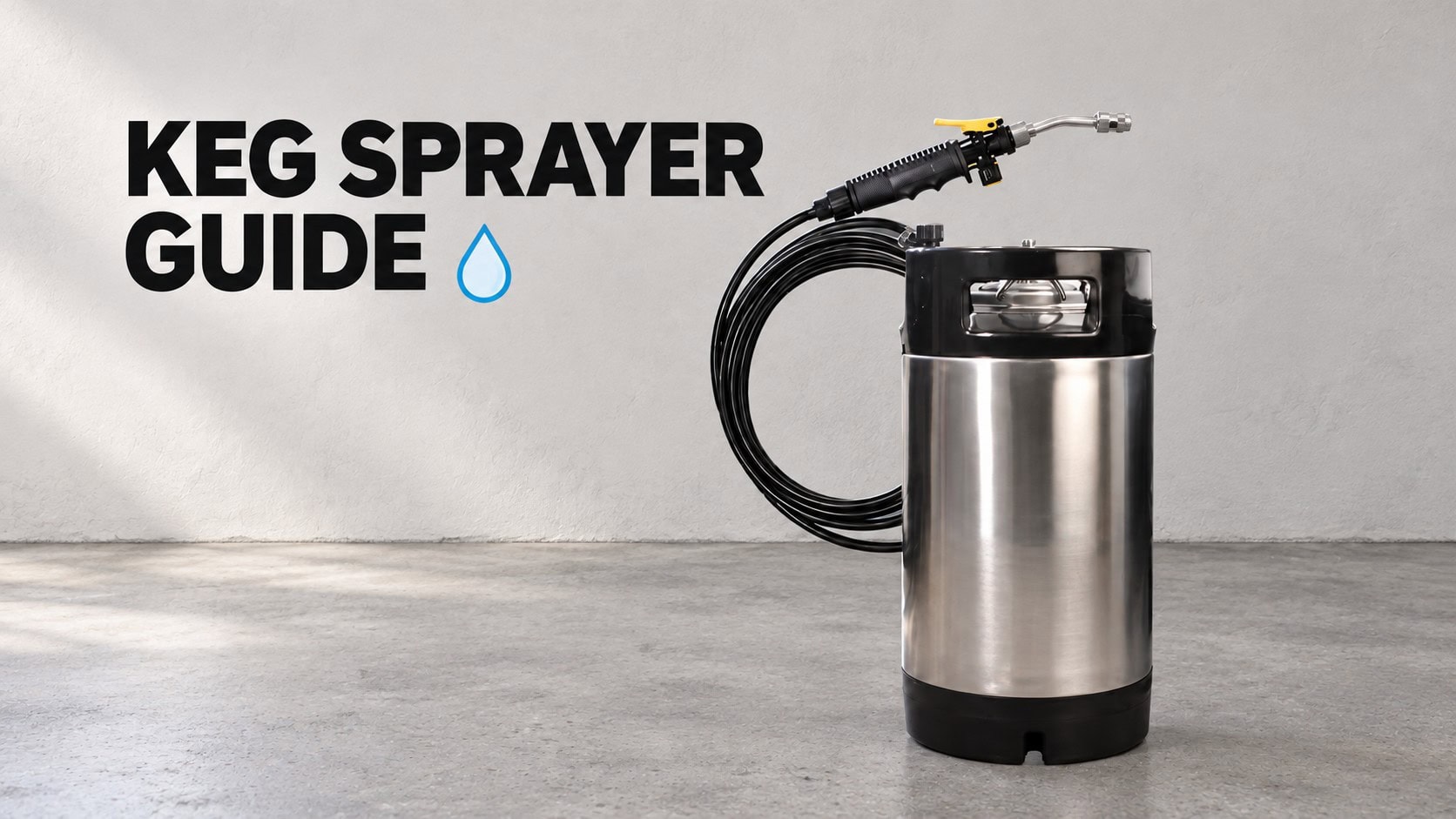
A keg sprayer gives installers pressurized application solution without constant hand pumping. This guide explains how it works, where it fits, and what to check before choosing one for window tint, paint protection film, vinyl wrap, or detailing.
What Is a Keg Sprayer?
A keg sprayer is a sealed pressure tank connected to a hose and spray gun. It is also called a tint keg, pressure keg sprayer, or detailing keg. Many versions use a stainless steel keg body with a protected top and base.
The tank stores water or a prepared installation solution. Compressed air creates pressure above the liquid, while an internal dip tube carries the liquid to the outlet. Pulling the trigger releases a controlled spray at the work area.
This format is especially useful when you need more liquid and a longer working time than a handheld spray bottle can provide.
How Does a Pressure Keg Sprayer Work?
The basic system has five functional parts:
- A sealed tank that holds the liquid and air space
- A removable lid with a locking mechanism
- An air inlet and pressure-relief valve
- A liquid outlet with a dip tube and quick connector
- A hose, trigger gun, and spray nozzle
After filling, you seal the lid, connect the hose, and add compressed air through the inlet. The air pushes the liquid through the dip tube. A suitable nozzle then shapes the output into a mist, fan, or stream, depending on the gun and tip.
The tank needs empty space for compressed air. Never fill it completely with liquid. Follow the model’s fill limit and pressure rating rather than copying settings from another keg sprayer.
Where Are Keg Sprayers Used?
Window Tint Installation
A window tint sprayer wets the glass and film with installation solution. The hose lets you move around a vehicle or work across large architectural panes without repeatedly carrying and pumping a small bottle.
Paint Protection Film
PPF installers can use a tint keg for slip or tack solution, provided every seal, hose, and nozzle is compatible with the chosen mixture. A controlled spray pattern helps distribute solution across large panels and curved surfaces.
Vinyl Wrap and Auto Detailing
A pressure keg can also support surface preparation, rinseless washing, and compatible detailing liquids. Chemical compatibility must be verified before use. Stainless steel construction does not automatically make every gasket, connector, or hose suitable for every chemical.
Keg Sprayer vs Hand-Pump Sprayer
| Factor | Keg Sprayer | Hand-Pump Sprayer |
| Pressure | Charged from an external air source | Restored by manual pumping |
| Capacity | Suited to longer jobs and repeated use | Suited to small jobs and quick touch-ups |
| Reach | Hose allows movement around the work area | Bottle stays in your hand or nearby |
| Setup | Requires filling, sealing, and pressurizing | Simple fill-and-pump operation |
| Best fit | Busy shops, large panels, and mobile crews | Occasional use or low-volume work |
A keg sprayer is not automatically better for every installer. If you only complete occasional small jobs, a compact pump sprayer may be easier. For frequent tint or PPF work, the larger supply and reduced pumping can make the pressure keg more practical.
How to Choose the Right Keg Sprayer
Match Capacity to Your Workload
A smaller tint keg is easier to carry and store. A larger tank reduces refill frequency but becomes heavier when filled. Consider your daily liquid use, vehicle access, storage space, and whether the sprayer will stay in a shop or travel in a van.
Check the Complete Fluid Path
Review more than the tank material. The lid seal, O-rings, dip tube, hose, connectors, trigger, filter, and nozzle all contact the solution. Ask the supplier to confirm compatibility with the exact liquid and dilution you plan to use.
Select the Hose and Nozzle
A longer hose increases reach but also takes more storage space and can snag in a crowded bay. Choose a nozzle pattern that suits your application. Adjustable stream-to-mist tips offer flexibility, while dedicated fan tips may deliver more repeatable coverage.
Inspect Pressure and Service Features
Look for a readable pressure rating, a functional relief valve, secure lid hardware, and dependable connectors. Replaceable seals and accessible spare parts can extend service life. A protected handle and base also help the tank withstand routine movement.
For sourcing, compare the tank and the assembled system separately. Confirm whether the quoted package includes the hose, spray gun, nozzle, connectors, pressure gauge, and air fitting. This prevents mismatched expectations when ordering in volume.
Safe Setup, Refilling, and Maintenance
- Inspect the tank, lid, seals, hose, and fittings before use.
- Pull the relief valve and confirm the tank is fully depressurized before opening.
- Add clean liquid without exceeding the marked fill limit.
- Seat and lock the lid according to the product instructions.
- Connect the hose and gun, then pressurize within the rated limit.
- Test the spray pattern away from the film or finished surface.
After the job, release all pressure before disconnecting parts or opening the lid. Empty solutions that should not remain in the system. Rinse the tank, dip tube, hose, filter, and nozzle with a compatible cleaning liquid.
Store the keg sprayer clean, dry, and unpressurized. Inspect seals for swelling, cracking, or flattening. If spray becomes uneven, check the nozzle and filter before increasing pressure. Never modify a pressure vessel or bypass its relief device.
Keg Sprayer Buying Checklist
- Tank capacity and maximum liquid fill
- Rated working pressure and relief-valve design
- Tank, seal, hose, and nozzle material compatibility
- Hose length and preferred spray pattern
- Connector type and local air-source compatibility
- Included accessories and available spare parts
- Packaging, labeling, and OEM requirements
FAQs about Keg Sprayers
Is a keg sprayer the same as a tint keg?
Usually, yes. In window-film markets, “tint keg” commonly describes a portable pressure keg sprayer used to apply water-based installation solution. “Detailing keg” and “spray tank” may refer to similar systems configured with different hoses, nozzles, or seals.
Can I use any solution in a stainless steel spray keg?
No. The liquid must be compatible with every wetted component, not only the stainless steel tank. Check the solution supplier’s safety data and ask the sprayer manufacturer about the seals, hose, fittings, filter, and nozzle.
How much pressure should I put in a keg sprayer?
Use only the pressure stated for your exact model and assembled system. Tank size, lid, fittings, hose, and spray hardware can have different limits. Do not rely on a pressure shown for another brand or capacity.
Why does my tint keg lose pressure?
Common causes include an improperly seated lid, worn O-rings, loose connectors, valve leakage, or a damaged hose. Depressurize the tank, inspect each sealing point, and replace parts with components approved for that model.
Can a keg sprayer produce both mist and a water stream?
Some spray guns use an adjustable nozzle that changes from a fine spray to a concentrated stream. Others use replaceable fixed-pattern tips. Confirm the supplied nozzle type and test it before beginning an installation.
Kegstorm develops stainless steel beverage and pressure-keg solutions for commercial buyers. Explore our keg sprayer range, or contact us with your capacity, fittings, hose, nozzle, and packaging requirements.